Update 10.55am (31st October ...) LOL, started Nanowrimo one day early. Who stole my calendar?
It's 8:30am on November 1st, and I have two NaNoWriMo forms in front of me. The first shows 30 rows with a blank space for the number of words written during each day. The second is an intraday progress form, broken down into hours from 9am until 11pm. (You can download both forms from this page)
I'll deal with the second form first. The idea is to write 500 words per hour, starting at the top of the hour and finishing when I have the 500. Then I get to do whatever I want (work, coffee, chocolate) until the beginning of the next hour. If you have a day job, just block out the hours you work and do your writing in the rest. (You need about 4 hours to do your daily NaNo wordcount, but should only use about 15-20 minutes of each hour for actual writing. E.g. 6pm until 10pm, or 6am to 7.30am, 30 mins at lunch, then another 1 1/2 hours at night.)
By the way, during Nano I recommend oven-cooked meals, not things you have to babysit every step of the way. Roasts and pies and one-tray meals are in, steaks and stir fry and so on are out. There are plenty of simple recipe ideas on my website, many of them ideal for Nanowrimo. (E.g. chicken rice one night, then chicken wraps the next with the leftovers.)
Now, I'm already breaking a rule by writing this instead of getting on with my wordcount, but I'm actually starting at 9am today. By then the rest of the household will have gone out and left me in peace.
Simon Haynes is the author of the Hal Spacejock and Hal Junior series (Amazon / Smashwords / other formats)
Monday, October 31, 2011


Friday, October 28, 2011
Delayed YAY! post
At the end of September I received my first copies of Hal Junior. I took pics, then realised I'd misplaced the XD card reader for my camera.
Well, I just found it and the pics were still sitting on the card:


Simon Haynes is the author of the Hal Spacejock and Hal Junior series (Amazon / Smashwords / other formats)
Well, I just found it and the pics were still sitting on the card:


Simon Haynes is the author of the Hal Spacejock and Hal Junior series (Amazon / Smashwords / other formats)
Tuesday, October 25, 2011
PIP part 3 - Adjusting the look of your PDF
In the previous post I showed you how easy it is to create a PDF from yWriter5.
I also left you with a cliffhanger: those doubled-up chapter headings. And you're probably wondering how you change the layout when yWriter doesn't seem to have any formatting options. (E.g. paper size, gutters, etc.)
I don't want to throw lots of code at you, so I'll cover the basics in this article and move on to more detail in future.
For now you need to know one thing: where yWriter is concerned you adjust your layout by altering a special text file called a LaTeX header. (You can also override layout on the fly, e.g. in the middle of a scene or chapter, but we'll get to that later.)
In yWriter5, click the Project menu, then Project Settings. This is where you enter the title of your novel, the author's name, and various other novel-specific values like deadline dates. Click the LaTeX tab and you'll see the following:

The Header File textbox is blank, which means yWriter will use the default. This is a file called 'LaTeXDefaultHeader.txt' which yWriter creates in the project folder every time you start a new project.
What you need to do is make a copy of the default header file, then tell yWriter to use the new file instead. Here's how: First, click the Open Project Folder button. Then rename LaTeXDefaultHeader. (I suggest something like LaTeXNameOfProject.txt)
When you've renamed it, click the [...] button and select the new file.
Now click the Edit button to open the header in Notepad. Woah! Nobody told me there'd be codes like these!

That shows my modified Latex file which you can download here. To update yours with mine, open the downloaded file, copy the contents, and paste them into your renamed LaTeX file. Then save your file.
Save the project settings, press Ctrl+Alt+X, open the exported Tex file and press Ctrl+Shift+F5 to generate and view the PDF. It's similar to the one you saw in the previous article, but this time the chapter headings should be correct.

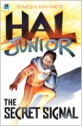
Here's the layout I used for Hal Junior. It's ideal for shorter books with chapter titles. (Instead of 'Chapter 1', 'Chapter 2', etc, I used proper chapter titles like 'The Secret Signal')
In the next article I'll explain how to tweak the codes in the header, and where to find more information on the LaTeX memoir class.
 Simon Haynes is the author of the Hal Spacejock Series and Hal Junior: The Secret Signal. By day he's a computer programmer and author, and by night he's the same only sleepier.
Simon Haynes is the author of the Hal Spacejock and Hal Junior series (Amazon / Smashwords / other formats)
I also left you with a cliffhanger: those doubled-up chapter headings. And you're probably wondering how you change the layout when yWriter doesn't seem to have any formatting options. (E.g. paper size, gutters, etc.)
I don't want to throw lots of code at you, so I'll cover the basics in this article and move on to more detail in future.
For now you need to know one thing: where yWriter is concerned you adjust your layout by altering a special text file called a LaTeX header. (You can also override layout on the fly, e.g. in the middle of a scene or chapter, but we'll get to that later.)
In yWriter5, click the Project menu, then Project Settings. This is where you enter the title of your novel, the author's name, and various other novel-specific values like deadline dates. Click the LaTeX tab and you'll see the following:

The Header File textbox is blank, which means yWriter will use the default. This is a file called 'LaTeXDefaultHeader.txt' which yWriter creates in the project folder every time you start a new project.
What you need to do is make a copy of the default header file, then tell yWriter to use the new file instead. Here's how: First, click the Open Project Folder button. Then rename LaTeXDefaultHeader. (I suggest something like LaTeXNameOfProject.txt)
When you've renamed it, click the [...] button and select the new file.
Now click the Edit button to open the header in Notepad. Woah! Nobody told me there'd be codes like these!

That shows my modified Latex file which you can download here. To update yours with mine, open the downloaded file, copy the contents, and paste them into your renamed LaTeX file. Then save your file.
Save the project settings, press Ctrl+Alt+X, open the exported Tex file and press Ctrl+Shift+F5 to generate and view the PDF. It's similar to the one you saw in the previous article, but this time the chapter headings should be correct.

Here's the layout I used for Hal Junior. It's ideal for shorter books with chapter titles. (Instead of 'Chapter 1', 'Chapter 2', etc, I used proper chapter titles like 'The Secret Signal')
In the next article I'll explain how to tweak the codes in the header, and where to find more information on the LaTeX memoir class.
Simon Haynes is the author of the Hal Spacejock and Hal Junior series (Amazon / Smashwords / other formats)
Monday, October 24, 2011
Free is good ...
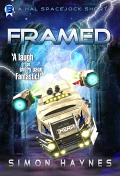
Hal Spacejock Framed is now a free download on Smashwords.
Enjoy!
Simon Haynes is the author of the Hal Spacejock and Hal Junior series (Amazon / Smashwords / other formats)
Sunday, October 23, 2011
First steps - TeX scenes (PIP)
This is the second post in my Publishing in Print (PIP) series. Today I'm going to explain how to define a TeX scene in yWriter.
Why would you want to do this? Well, TeX can create an automatic table of contents for your novel with a single command, so why don't we have a go at that? (I'm using the word 'novel', but yWriter can be used for non-fiction too.)
First things first. Create a new chapter in yWriter, move it to the very top, and double-click it. Change the chapter title to @TOC.
The @ stops yWriter exporting the chapter title (which we don't need, since LaTex supplies one.)
Add a scene to the TOC chapter and paste this in:
<TEX>
\thispagestyle{empty}
\tableofcontents
To explain: the <TEX> keyword tells yWriter NOT to convert the rest of the scene during TeX export, and it also suppresses the scene when you're exporting to other formats. (HTML ebook for now, others to follow.)
The <TEX> keyword must be the very first thing in your scene. First line, first characters. (There's another pair of keywords you can use to include TeX code in the middle of a regular scene, but I'll cover those later.)
As for the other two commands:
\thispagestyle{empty} is a TeX statement which suppresses headers and footers and page numbers.
\tableofcontents should be obvious: This is the command which tells the TeX parser to create a table of contents at this position.
Save and close the scene, then right-click your @TOC chapter and select 'Mark as last chapter of frontmatter'. This is important for page numbering reasons, amongst others. Later on, if you add more front matter after the TOC chapter, make sure you apply this setting again.
Now press Ctrl+Alt+X to export, double-click the tex file and (in TeXnicCenter) press Ctrl+Shift+F5 to generate and view it as a PDF. Sometimes the table of contents comes up blank the first time. If so, close your PDF viewer and press Ctrl+Shift+F5 again.
Did it work? If it did, you should have a table of contents for your novel.
That's the end of this tutorial, but here's one useful tip:
If you press Ctrl+Alt+X in yWriter5 when the Tex file is already open, TeXnicCenter will display a dialog asking whether you want to refresh from the new file. Just click yes. This is very handy when you're making small changes to layout in yWriter5.
On the other hand the next step of the process (generating the PDF) should only be done after you've closed the PDF viewer.
One last thing: you may be seeing double chapter headings in your PDF. I'll show you how to fix this in the next article.
Simon Haynes is the author of the Hal Spacejock Series and Hal Junior: The Secret Signal. By day he's a computer programmer and author, and by night he's the same only sleepier.
Simon Haynes is the author of the Hal Spacejock and Hal Junior series (Amazon / Smashwords / other formats)
Why would you want to do this? Well, TeX can create an automatic table of contents for your novel with a single command, so why don't we have a go at that? (I'm using the word 'novel', but yWriter can be used for non-fiction too.)
First things first. Create a new chapter in yWriter, move it to the very top, and double-click it. Change the chapter title to @TOC.
The @ stops yWriter exporting the chapter title (which we don't need, since LaTex supplies one.)
Add a scene to the TOC chapter and paste this in:
<TEX>
\thispagestyle{empty}
\tableofcontents
To explain: the <TEX> keyword tells yWriter NOT to convert the rest of the scene during TeX export, and it also suppresses the scene when you're exporting to other formats. (HTML ebook for now, others to follow.)
The <TEX> keyword must be the very first thing in your scene. First line, first characters. (There's another pair of keywords you can use to include TeX code in the middle of a regular scene, but I'll cover those later.)
As for the other two commands:
\thispagestyle{empty} is a TeX statement which suppresses headers and footers and page numbers.
\tableofcontents should be obvious: This is the command which tells the TeX parser to create a table of contents at this position.
Save and close the scene, then right-click your @TOC chapter and select 'Mark as last chapter of frontmatter'. This is important for page numbering reasons, amongst others. Later on, if you add more front matter after the TOC chapter, make sure you apply this setting again.
Now press Ctrl+Alt+X to export, double-click the tex file and (in TeXnicCenter) press Ctrl+Shift+F5 to generate and view it as a PDF. Sometimes the table of contents comes up blank the first time. If so, close your PDF viewer and press Ctrl+Shift+F5 again.
Did it work? If it did, you should have a table of contents for your novel.
That's the end of this tutorial, but here's one useful tip:
If you press Ctrl+Alt+X in yWriter5 when the Tex file is already open, TeXnicCenter will display a dialog asking whether you want to refresh from the new file. Just click yes. This is very handy when you're making small changes to layout in yWriter5.
On the other hand the next step of the process (generating the PDF) should only be done after you've closed the PDF viewer.
One last thing: you may be seeing double chapter headings in your PDF. I'll show you how to fix this in the next article.
Simon Haynes is the author of the Hal Spacejock and Hal Junior series (Amazon / Smashwords / other formats)
Saturday, October 22, 2011
New blog series: publishing in print (PIP) via LSI/Createspace
Over the past month or so I've blogged about editing, polishing, proofing and publicity for the self-pubbed (or indie-pubbed) writer. One thing I haven't really covered in detail is ... getting your work into print. As in generating the PDF you have to upload to Createspace and/or Lightning Source so they can generate printed copies of your work.
I realise the world is hurtling towards ebooks, but there are still segments of the market where paperbacks rule. One of those is middle grade fiction, and since that's the genre for Hal Junior, I had to generate a hard copy as well as an ebook.
There's no substitute for getting your interior layout designed by a pro, but this article is written for those of you focusing primarily on ebooks. If you're considering putting out a paper version as a kind of sideline, it's hard to justify the expense of interior design against potential sales. And remember, if the book takes off you can always hire a pro and get it redone. (Or wait for a publisher to swoop on the print rights and let THEM pay for it ...)
Warning: I'm going to be talking about yWriter in this series of posts. It's freeware, so you don't have to pay anything, but it is Windows-only. (You can also run it on Linux and on the Mac, using the Mono runtime library, but it's not bulletproof.)
The second part of the puzzle is a collection of software called the ProTeXt TeX distribution (also for Windows. Sorry, no idea about Mac and Linux.) This is a 750mb download (yikes!) which contains a whole bunch of programs and addons which you don't actually have to do anything with. Just download and install the thing for now.
If you've just installed yWriter5 and don't have a project to load, follow these instructions to import a work in progress.
Once you have a project loaded, press Ctrl+Alt+X on the yWriter main screen. yWriter will instantly generate a TEX file of your project. Double-click this TEX file to open it in TeXnic Centre, and press Ctrl+Shift+F5 in that software to generate and view the PDF.
The result is a very basic book block, not ready for uploading yet, but I thought it would be good to show the process before we delve into the fine detail. We're not going to use TeXnic Centre for much - all the hard work will be done using yWriter5.
Simon Haynes is the author of the Hal Spacejock Series and Hal Junior: The Secret Signal. By day he's a computer programmer and author, and by night he's the same only sleepier.
Simon Haynes is the author of the Hal Spacejock and Hal Junior series (Amazon / Smashwords / other formats)
I realise the world is hurtling towards ebooks, but there are still segments of the market where paperbacks rule. One of those is middle grade fiction, and since that's the genre for Hal Junior, I had to generate a hard copy as well as an ebook.
There's no substitute for getting your interior layout designed by a pro, but this article is written for those of you focusing primarily on ebooks. If you're considering putting out a paper version as a kind of sideline, it's hard to justify the expense of interior design against potential sales. And remember, if the book takes off you can always hire a pro and get it redone. (Or wait for a publisher to swoop on the print rights and let THEM pay for it ...)
Warning: I'm going to be talking about yWriter in this series of posts. It's freeware, so you don't have to pay anything, but it is Windows-only. (You can also run it on Linux and on the Mac, using the Mono runtime library, but it's not bulletproof.)
The second part of the puzzle is a collection of software called the ProTeXt TeX distribution (also for Windows. Sorry, no idea about Mac and Linux.) This is a 750mb download (yikes!) which contains a whole bunch of programs and addons which you don't actually have to do anything with. Just download and install the thing for now.
If you've just installed yWriter5 and don't have a project to load, follow these instructions to import a work in progress.
Once you have a project loaded, press Ctrl+Alt+X on the yWriter main screen. yWriter will instantly generate a TEX file of your project. Double-click this TEX file to open it in TeXnic Centre, and press Ctrl+Shift+F5 in that software to generate and view the PDF.
The result is a very basic book block, not ready for uploading yet, but I thought it would be good to show the process before we delve into the fine detail. We're not going to use TeXnic Centre for much - all the hard work will be done using yWriter5.
Simon Haynes is the author of the Hal Spacejock Series and Hal Junior: The Secret Signal. By day he's a computer programmer and author, and by night he's the same only sleepier.
Simon Haynes is the author of the Hal Spacejock and Hal Junior series (Amazon / Smashwords / other formats)
Monday, October 17, 2011
Your thoughts on ebooks for Middle Grade readers
I'm interested in the pros and cons of publishing ebooks for younger readers. My original plan was paperback only, because I didn't think dedicated e-readers would have made it to younger readers yet, but my daughters convinced me to release an ebook because a lot of their friends use smart phones and laptops to read with.
Has anyone else published in both print and ebook, and what were your findings?
Simon Haynes is the author of the Hal Spacejock and Hal Junior series (Amazon / Smashwords / other formats)
Has anyone else published in both print and ebook, and what were your findings?
Simon Haynes is the author of the Hal Spacejock and Hal Junior series (Amazon / Smashwords / other formats)
Saturday, October 15, 2011
A close shave
Three months ago I sent Hal Junior queries off to a couple of publishers, and submitted the full manuscript to a third. One of the emails was just to see whether the publisher was open to submissions or not, because their guidelines weren't clear. The other query was a proper one, with a cover letter, outline and synopsis. The third submission (full manuscript) also followed the guidelines.
All three publishers had a similar message on their websites: if you don't hear anything in three or four months, we're not interested.
Two months later I decided to get Hal Junior ready for release. I would spend the rest of August and the whole of September polishing, working with an editor, working with a cover artist and organising the internal art, and if I hadn't heard anything from the publishers by September 30 I'd go ahead and release Hal Junior myself. If they DID get back to me I could put my self-pub plans on hold while I weighed up my options.
Then everything changed: In September I got the rights back to my Hal Spacejock novels. Instead of setting up an Indie press to publish one new title (Hal Junior), I now had five books to publish. And next year I'd have Hal Spacejock 5 and at least one more Hal Junior.
I wrote to the publisher holding the full manuscript and asked them to delete my query if they hadn't looked at it yet. They came back promptly and that was that. I wasn't fussed about the two queries since it was now over two months down the track, and I figured they'd have got back to me by now. (I guessed - wrongly - that publishers might prioritise queries from established authors. If I were a publisher I'd have a query email on my site for use by previously-published authors, but I guess they expect us to have agents. I DID have an agent, but he doesn't rep junior fiction. Anyway ...)
Hal Junior was released on October the 1st and is already scoring some very nice 4- and 5-star reviews on blogs, Amazon, Goodreads and LibraryThing. I love the cover, I love how the book turned out and I know I used every minute of every day to get that book published.
So yesterday I got an email from one of the remaining publishers, expressing an interest in the novel and requesting a full. Whoops, too slow. I sent back an apologetic email, saying I would have pulled the query had I realised it was still in their queue. Hopefully they won't be too annoyed.
Did I miss a wonderful opportunity? No, I don't see it like that. Chances are they'd have kept the manuscript for several months before passing.
But Simon, every author wants to work with a trade publisher!
I'm going to let you into a secret: The reason Hal Spacejock 5 was taking so long (3 years and counting ...) is because I lost interest in publishing. The prospect of going through the lengthy process a fifth time was too much. This isn't a reflection on my publisher, who were a joy to work with ... it's just the way I am. Fun becomes meh, meh becomes a chore, and I avoid chores like authors the world over.
When I submitted Hal Junior to those three publishers I did it because it was What Authors Do, but my heart wasn't in it. I was hoping they'd say no so I could get on with my plans.
And it's working. Since deciding to self-publish I've been up at 6am or 7am, seven days a week, eager to get at the computer and work on my latest idea. I'm fired up about my writing, I'm working on Hal 5 again, and I'm enjoying every minute working in my new business.
Don't get me wrong: I'm not belittling trade publishing. Back in 2005, when I first saw Hal Spacejock on the shelves of every bookstore I visited it was one of the best times of my life. Pursuing trade publication is an important goal for a novelist, but once you've achieved that goal it makes sense to set a new one.
'More of the same' is not something you'll find in my resumé.
Simon Haynes is the author of the Hal Spacejock and Hal Junior series (Amazon / Smashwords / other formats)
All three publishers had a similar message on their websites: if you don't hear anything in three or four months, we're not interested.
Two months later I decided to get Hal Junior ready for release. I would spend the rest of August and the whole of September polishing, working with an editor, working with a cover artist and organising the internal art, and if I hadn't heard anything from the publishers by September 30 I'd go ahead and release Hal Junior myself. If they DID get back to me I could put my self-pub plans on hold while I weighed up my options.
Then everything changed: In September I got the rights back to my Hal Spacejock novels. Instead of setting up an Indie press to publish one new title (Hal Junior), I now had five books to publish. And next year I'd have Hal Spacejock 5 and at least one more Hal Junior.
I wrote to the publisher holding the full manuscript and asked them to delete my query if they hadn't looked at it yet. They came back promptly and that was that. I wasn't fussed about the two queries since it was now over two months down the track, and I figured they'd have got back to me by now. (I guessed - wrongly - that publishers might prioritise queries from established authors. If I were a publisher I'd have a query email on my site for use by previously-published authors, but I guess they expect us to have agents. I DID have an agent, but he doesn't rep junior fiction. Anyway ...)
Hal Junior was released on October the 1st and is already scoring some very nice 4- and 5-star reviews on blogs, Amazon, Goodreads and LibraryThing. I love the cover, I love how the book turned out and I know I used every minute of every day to get that book published.
So yesterday I got an email from one of the remaining publishers, expressing an interest in the novel and requesting a full. Whoops, too slow. I sent back an apologetic email, saying I would have pulled the query had I realised it was still in their queue. Hopefully they won't be too annoyed.
Did I miss a wonderful opportunity? No, I don't see it like that. Chances are they'd have kept the manuscript for several months before passing.
But Simon, every author wants to work with a trade publisher!
I'm going to let you into a secret: The reason Hal Spacejock 5 was taking so long (3 years and counting ...) is because I lost interest in publishing. The prospect of going through the lengthy process a fifth time was too much. This isn't a reflection on my publisher, who were a joy to work with ... it's just the way I am. Fun becomes meh, meh becomes a chore, and I avoid chores like authors the world over.
When I submitted Hal Junior to those three publishers I did it because it was What Authors Do, but my heart wasn't in it. I was hoping they'd say no so I could get on with my plans.
And it's working. Since deciding to self-publish I've been up at 6am or 7am, seven days a week, eager to get at the computer and work on my latest idea. I'm fired up about my writing, I'm working on Hal 5 again, and I'm enjoying every minute working in my new business.
Don't get me wrong: I'm not belittling trade publishing. Back in 2005, when I first saw Hal Spacejock on the shelves of every bookstore I visited it was one of the best times of my life. Pursuing trade publication is an important goal for a novelist, but once you've achieved that goal it makes sense to set a new one.
'More of the same' is not something you'll find in my resumé.
Simon Haynes is the author of the Hal Spacejock and Hal Junior series (Amazon / Smashwords / other formats)
Friday, October 14, 2011
Giveaways for Hal Junior: The Secret Signal
I'm currently offering 5 signed paperback copies via LibraryThing's Member Giveaway program (currently a 1 in 20 chance of scoring) and another 5 signed copies via Goodreads.
Both giveaways close October 23.
I'm also running a Twitter contest where you simply have to retweet the following to be in the running:
I want to #WinHalJunior with @spacejock http://t.co/hSg90eEH
That one closes 15th October.
Good luck!
Simon Haynes is the author of the Hal Spacejock and Hal Junior series (Amazon / Smashwords / other formats)
Both giveaways close October 23.
I'm also running a Twitter contest where you simply have to retweet the following to be in the running:
I want to #WinHalJunior with @spacejock http://t.co/hSg90eEH
That one closes 15th October.
Good luck!
Simon Haynes is the author of the Hal Spacejock and Hal Junior series (Amazon / Smashwords / other formats)
Saturday, October 08, 2011
Galaxy Games blog tour
Galaxy Games author Greg R. Fishbone and I had a chat yesterday to discuss junior science fiction, publishing, childhood and writing for kids. Enjoy!
GREG: Okay, let's welcome everyone to our middle-grade science fiction author chat. I'm Greg R. Fishbone, author of the Galaxy Games series from the Tu Books imprint of Lee & Low Books. The first book, THE CHALLENGERS, starts the story of an international team of Earth kids competing against teams of alien kids from across the galaxy.
SIMON: Hi everyone. I'm Simon Haynes, Australian author of the adult/teen Hal Spacejock series (Fremantle Press) AND a brand new novel for middle-grade readers: Hal Junior The Secret Signal. Hal Junior lives aboard a space station in the distant future, and the novel covers the events immediately after a supply ship docks. There's a plot against the space station, a ton of laughs and a home made space cannon.
GREG: I'm looking forward to learning more about the science fiction market in Australia and how it may be different from or similar to that here in the United States.
SIMON: I think the lack of middle-grade SF might be a worldwide phenomenon. In Australia, as everywhere else, publishers release books with appeal to the widest potential market. Numerous people have told me MG SF doesn't sell because it doesn't appeal to the majority of younger readers.
GREG: I've definitely heard from young readers and from those trying to put books into their hands that middle-grade SF is hard to find on the shelves.
SIMON: Yes - it's hard to sell lots of MG SF when it barely exists. After I'd written Hal Junior I cast around for similar titles (it's handy to have a reference when trying to describe a new novel) and some of the suggestions were chalk and cheese.
SIMON: E.g. Hal Jnr is 200 pages, 30,000 words and 40+ small illustrations (some sight gags, some diagrams of airlocks and recycling processes.) People were suggesting books with 70 pages, written with sparse sentences barely five words long.
GREG: So there's a market for SF chapter books but not middle grade? Interesting.
SIMON: I was out there looking for meaty science fiction for younger readers, but mostly they seemed to be simplistic early-reader books. That's why I was interested in Galaxy Games, because it looked like we could feed off each others promotional efforts.
GREG: If there's a dearth of science fiction for middle grades, I'd think that humorous sci-fi would be even more of a specialized niche to find.
SIMON: Absolutely.
GREG: What about Young Adult? There seems to be a lot more in that age range here, especially dystopias.
SIMON: YA is a whole new ball game. Teenagers, romantic elements, angst ... I didn't enjoy living through the experience and I'm certainly not going to write about it!
SIMON: MG involves school, friends, family. A lot of YA is about becoming an adult. Much more serious.
GREG: I agree. The borderline is fuzzy sometimes, but MG is where my comfort zone is as an author. But you've also written for adults, correct?
SIMON: Yes, the Hal Spacejock series. The first was released in 2005, and there have been three more since then. They don't feature zany comedy like Hitchhiker's Guide, they're just about a regular guy who starts off with a small problem and turns it into something huge and overwhelming. E.g. in one book he places an order for 100 coffee makers instead of one, and the consequences bring three planets to the brink of war.
GREG: Like Arthur Dent?
SIMON: One reviewer described Hal Spacejock as Dent, Zaphod and Ford Prefect all rolled into one.
GREG: Sounds like a lot of fun.
SIMON: I loved writing them, but they're a huge amount of work. Writing MG was a breath of fresh air, and I'm really enjoying the new challenge.
GREG: What's the biggest difference between writing for adults and writing for kids?
SIMON: For me, not too much. I already write in a fairly plain style, and I believe description is something you write when you run out of plot ideas. With the junior books I stuck to one point of view and one plot, and of course they feature a younger character. As for content and style, I spent part of my childhood in rural Spain which was casual and very free. I hope I've brought some of that to Hal Junior.

GREG: Is there a Spanish feel to the book?
SIMON: No, not at all. That was a red herring ;-)
GREG: Is it particularly Australian?
SIMON: Not Australian either. I grew up across three countries, travelled to more than 80, attended about 12 different schools and learned three different languages so I've seen my share of cultures. My family is like the United Nations.
GREG: Where were you when I was putting together my international team of child athletes? :D
SIMON: Hah ;-)
SIMON: When I mentioned growing up in Spain, I meant the freedom I had as a kid: going off camping for 2-3 days when I was 9 or 10, having an air rifle, riding a motorbike.
SIMON: Life is very restricted for many kids these days, due to dangers real or imagined. They're kept in cotton wool a bit (I'm guilty of this myself with our daughters). Hal actually gets into serious danger a few times in the book.
GREG: It's a dangerous galaxy.
SIMON: Yes, space is dangerous in a way that our everyday lives aren't. Open the wrong door, pull the wrong lever and you could die. Obviously I'm not suggesting kids go live in space, but it's a great setting for a novel. That's why there should be more junior SF.
GREG: The world is full of new and strange experiences. The galaxy, even moreso.
SIMON: So tell me about Galaxy Games. Why would I recommend your book to the local primary school? (Primary = years 1-8 in Australia)

GREG: Galaxy Games combines science fiction with sports in a fun and exciting way. I wanted to put a team of kids into the biggest game I could imagine, and there was no way to make that happen by staying on Earth. The events of the first book involve first contact with aliens and all the repercussions for the entire human race. There's a lot in there for a kid to like and to think about.
SIMON: Sports are always popular in books, and it's one of the first areas where kids learn about competing, trying your best, and the thrill of winning. And, of course, the crushing sense of defeat. Gotta keep things real! Plus everyone loves the underdog who pulls through against the odds.
GREG: Very true. And there's always a way to snatch defeat from the jaws of victory.
SIMON: You just described Hal Spacejock. (Originally Hal Junior was supposed to be Hal Spacejock as a 10-year-old, but that idea went out the window when a beta reader said Junior was way smarter than the adult he was supposed to grow into! I toyed with the idea of a dumb-down ray, but in the end I made Hal Jnr a new character.
GREG: Kids like reading about smart kids, or at least kids who can outsmart adults.
SIMON: I saw that in a boy's review for Hal Junior. He loved the fact Hal Jnr was smart but didn't have any interest in doing his homework, and he could get around Teacher & his parents when he tried. Not the best role model, but it's fiction! Of course, teachers haven't seen my insulting pic of them in the book yet ... there's a gruesome face with Teacher crossed out and Space Monster written underneath ;-) The sort of thing we all used to draw in our exercise books.
GREG: Kids love reading about kids who can bend the rules, or have the rules not apply to them. And when I say, "Kids love this or that," what I really mean is that I loved that stuff when I was a young reader. I assume kids today still do.
SIMON: That gets back to my childhood in Spain in the 70's. We had rules, but we also had a ton of freedom. E.g.I nearly got run down by a police car when I was riding a moped (no license or helmet), and when he pulled me over I pretended I didn't understand a word of Spanish. He shrugged and let me off.
GREG: Sounds like a wild way to grow up. I'm jealous.
GREG: Do you do your own artwork?
SIMON: Not important stuff like the cover! Internal art ... there's a story behind that. There are three very good artists in my immediate family, but I didn't want to ask them to draw a bunch of art when I was still shopping the novel around.
So, I did rough pencil sketches to keep myself busy. Then, when I made the decision to self-publish, I had a very short timeframe to get all the art done. I wanted one illustration per chapter (about 25 all up), and every one of my family members was already flat out.
I took the sketches, loaded them into Corel Draw and traced them manually with vectors. Then I smoothed them out, added detail, and figured they'd actually come out okay.
Ended up with 42 illustrations - a nice sfnal number!
GREG: Very cool. I did something similar with my first book, THE PENGUINS OF DOOM. I had included some doodles with my manuscript to give the publisher an idea of what she might get a real artist to do--but instead, she liked my style of art for the book. I'm very happy that someone else did the art for Galaxy Games, though.
SIMON: Yes, pro art is always a good idea. The cover artist for Hal Junior also did the covers for Hal Spacejock (commissioned by my publisher.) Cover art is one area where authors should definitely leave it to the pros!
GREG: Now I was very interested that you're self-publishing the Hal Jr. series, spinning it off from what had been a traditionally-published series. It seems like more and more authors are going that route.
SIMON: Yes, I've been running a series of blog posts about the process. I did self-publish way back in 2001, but that was too soon and I was more than pleased to get picked up by a traditional publisher. It was a great learning experience and I made a lot of industry contacts which are now proving vital. E.g. bookstore owners, librarians, distributors, reviewers ... many would think twice before taking on a self-pubbed book, if they showed any interest at all, but in my case they already know I've been fairly successful with the Hal Spacejock books.
SIMON: The same thing is being repeated all over the planet. Authors are seeing their existing series cancelled because bookstores won't order in the earlier books, and they're asking themselves if this is the best way to bring their work to the public.
GREG: Was it hard to act as publisher and author for the same work? It would seem like two very different hats to wear.
SIMON: Sure, but my background is small business, wholesale, marketing ... Once the artistic side is done I put on my three piece suit and grow a ponytail and start running things up the flagpole to see who salutes.
SIMON: One of the reasons I decided to self-publish is because I get over 120,000 visitors per month to my various websites, mostly to grab copies of all my free software (e.g. yWriter) or read my articles on publishing and writing a novel. (A lot of my articles are the #1 search result on Google these days.) The traffic keeps growing and I can easily include a cover in the sidebar ...
GREG: Very impressive! It certainly helps to have a platform.
SIMON: On the other hand they're mostly interested in writing and/or software, perhaps not MG science fiction. It can't hurt to get the name out there though.
GREG: I think a lot of adults who enjoy science fiction are looking for gateway books to get their children into the genre, so they can share their common interest. I think these books are something that can be cross-generational.
SIMON: Yes, that's how I approached the Spacejock publisher with Hal Junior. I told them it was a way to revitalise the adult series ... get kids interested with Hal Junior, and when they're a couple of years older they're shoe-ins for the Hal Spacejock books.
SIMON: Unfortunately the Spacejock publisher didn't bite. Scratch that - I was actually quite pleased they didn't because I was already wondering why I was approaching publishers with my new series when I could go it alone.
Two months after sending out my queries, I wrote back to each publisher asking them to delete my submissions.
GREG: Did you use a professional editor or did you self-edit?
SIMON: Definitely used a professional, but only after months of self-editing. I'm a perfectionist, and I fret over every word of every sentence, often going through 20+ printed drafts. (I have stacks of hand-edited manuscripts to prove it.) When I start changing sentences back I know it's time to get professional help. (And hire an editor.)
GREG: I knew we had a lot in common!
SIMON: You too huh?
GREG: If it were up to me, I'd never finish. I enjoy revision almost too much.
SIMON: When I read a sentence it's not just words, meaning and humo(u)r. It also has to have the right rhythm. (That sentence doesn't. Let me try again.) It must also have the right cadence. (Bit Better).
I have a sing-song version of the text going through my mind while I'm writing, and I reinforce it when I edit.
GREG: There are a lot of elements that have to be right. Characters, language, humor, style--and in science fiction, the science has to be right as well.
SIMON: Yes, although I'm not a scientist which makes writing adult SF a bit harder. (Computer scientist, yes. That's not relevant!) I use a fair bit of hand-waving, and my characters aren't scientists either so why would they discuss how a hyperdrive works? I avoid writing about noises in space, and I've researched how an explosion in space evolves from the initial bang. No shockwave, but particles fly forever. Fascinating! Very intense, very quick flash.
GREG: Lots of cool stuff when you look into it. I find it helps to have an interest in science and the ability to do at least some cursory research on a lay person level.
SIMON: (As a kid I played with fireworks all the time.)
SIMON: BTW what's your own background?
GREG: I read science fiction and fantasy as a kid, wrote it in college, kept writing it in law school. It's what I've always wanted to do, really, but I knew it wouldn't be much of a day job.
SIMON: That's for sure. During school visits I sometimes talk about the life of an author, and by the time I've finished there's usually one holdout who still wants to be a writer while the rest want to be police officers, stock brokers, teachers, you - name - it.
GREG: I've heard a theory once that we have about one storyteller for about every thirty people because that's how we evolved--thirty people in a tribe, sitting around a fire, listening to one voice.
SIMON: Interesting - I hadn't heard that one before! Coincidentally it works out one per classroom, which is about right.
GREG: We should probably wrap up the chat. Any other topics you want to hit on our way out?
SIMON: I think we've covered most things. Maybe people can ask questions in the comments and one or the other of us can answer there?
GREG: Sounds good. This was fun.
SIMON: Yes, thanks for the chat!
And here's your all-important puzzle piece for the Galaxy Games blog tour competition:

Simon Haynes is the author of the Hal Spacejock and Hal Junior series (Amazon / Smashwords / other formats)
GREG: Okay, let's welcome everyone to our middle-grade science fiction author chat. I'm Greg R. Fishbone, author of the Galaxy Games series from the Tu Books imprint of Lee & Low Books. The first book, THE CHALLENGERS, starts the story of an international team of Earth kids competing against teams of alien kids from across the galaxy.
SIMON: Hi everyone. I'm Simon Haynes, Australian author of the adult/teen Hal Spacejock series (Fremantle Press) AND a brand new novel for middle-grade readers: Hal Junior The Secret Signal. Hal Junior lives aboard a space station in the distant future, and the novel covers the events immediately after a supply ship docks. There's a plot against the space station, a ton of laughs and a home made space cannon.
GREG: I'm looking forward to learning more about the science fiction market in Australia and how it may be different from or similar to that here in the United States.
SIMON: I think the lack of middle-grade SF might be a worldwide phenomenon. In Australia, as everywhere else, publishers release books with appeal to the widest potential market. Numerous people have told me MG SF doesn't sell because it doesn't appeal to the majority of younger readers.
GREG: I've definitely heard from young readers and from those trying to put books into their hands that middle-grade SF is hard to find on the shelves.
SIMON: Yes - it's hard to sell lots of MG SF when it barely exists. After I'd written Hal Junior I cast around for similar titles (it's handy to have a reference when trying to describe a new novel) and some of the suggestions were chalk and cheese.
SIMON: E.g. Hal Jnr is 200 pages, 30,000 words and 40+ small illustrations (some sight gags, some diagrams of airlocks and recycling processes.) People were suggesting books with 70 pages, written with sparse sentences barely five words long.
GREG: So there's a market for SF chapter books but not middle grade? Interesting.
SIMON: I was out there looking for meaty science fiction for younger readers, but mostly they seemed to be simplistic early-reader books. That's why I was interested in Galaxy Games, because it looked like we could feed off each others promotional efforts.
GREG: If there's a dearth of science fiction for middle grades, I'd think that humorous sci-fi would be even more of a specialized niche to find.
SIMON: Absolutely.
GREG: What about Young Adult? There seems to be a lot more in that age range here, especially dystopias.
SIMON: YA is a whole new ball game. Teenagers, romantic elements, angst ... I didn't enjoy living through the experience and I'm certainly not going to write about it!
SIMON: MG involves school, friends, family. A lot of YA is about becoming an adult. Much more serious.
GREG: I agree. The borderline is fuzzy sometimes, but MG is where my comfort zone is as an author. But you've also written for adults, correct?
SIMON: Yes, the Hal Spacejock series. The first was released in 2005, and there have been three more since then. They don't feature zany comedy like Hitchhiker's Guide, they're just about a regular guy who starts off with a small problem and turns it into something huge and overwhelming. E.g. in one book he places an order for 100 coffee makers instead of one, and the consequences bring three planets to the brink of war.
GREG: Like Arthur Dent?
SIMON: One reviewer described Hal Spacejock as Dent, Zaphod and Ford Prefect all rolled into one.
GREG: Sounds like a lot of fun.
SIMON: I loved writing them, but they're a huge amount of work. Writing MG was a breath of fresh air, and I'm really enjoying the new challenge.
GREG: What's the biggest difference between writing for adults and writing for kids?
SIMON: For me, not too much. I already write in a fairly plain style, and I believe description is something you write when you run out of plot ideas. With the junior books I stuck to one point of view and one plot, and of course they feature a younger character. As for content and style, I spent part of my childhood in rural Spain which was casual and very free. I hope I've brought some of that to Hal Junior.
GREG: Is there a Spanish feel to the book?
SIMON: No, not at all. That was a red herring ;-)
GREG: Is it particularly Australian?
SIMON: Not Australian either. I grew up across three countries, travelled to more than 80, attended about 12 different schools and learned three different languages so I've seen my share of cultures. My family is like the United Nations.
GREG: Where were you when I was putting together my international team of child athletes? :D
SIMON: Hah ;-)
SIMON: When I mentioned growing up in Spain, I meant the freedom I had as a kid: going off camping for 2-3 days when I was 9 or 10, having an air rifle, riding a motorbike.
SIMON: Life is very restricted for many kids these days, due to dangers real or imagined. They're kept in cotton wool a bit (I'm guilty of this myself with our daughters). Hal actually gets into serious danger a few times in the book.
GREG: It's a dangerous galaxy.
SIMON: Yes, space is dangerous in a way that our everyday lives aren't. Open the wrong door, pull the wrong lever and you could die. Obviously I'm not suggesting kids go live in space, but it's a great setting for a novel. That's why there should be more junior SF.
GREG: The world is full of new and strange experiences. The galaxy, even moreso.
SIMON: So tell me about Galaxy Games. Why would I recommend your book to the local primary school? (Primary = years 1-8 in Australia)
GREG: Galaxy Games combines science fiction with sports in a fun and exciting way. I wanted to put a team of kids into the biggest game I could imagine, and there was no way to make that happen by staying on Earth. The events of the first book involve first contact with aliens and all the repercussions for the entire human race. There's a lot in there for a kid to like and to think about.
SIMON: Sports are always popular in books, and it's one of the first areas where kids learn about competing, trying your best, and the thrill of winning. And, of course, the crushing sense of defeat. Gotta keep things real! Plus everyone loves the underdog who pulls through against the odds.
GREG: Very true. And there's always a way to snatch defeat from the jaws of victory.
SIMON: You just described Hal Spacejock. (Originally Hal Junior was supposed to be Hal Spacejock as a 10-year-old, but that idea went out the window when a beta reader said Junior was way smarter than the adult he was supposed to grow into! I toyed with the idea of a dumb-down ray, but in the end I made Hal Jnr a new character.
GREG: Kids like reading about smart kids, or at least kids who can outsmart adults.
SIMON: I saw that in a boy's review for Hal Junior. He loved the fact Hal Jnr was smart but didn't have any interest in doing his homework, and he could get around Teacher & his parents when he tried. Not the best role model, but it's fiction! Of course, teachers haven't seen my insulting pic of them in the book yet ... there's a gruesome face with Teacher crossed out and Space Monster written underneath ;-) The sort of thing we all used to draw in our exercise books.
GREG: Kids love reading about kids who can bend the rules, or have the rules not apply to them. And when I say, "Kids love this or that," what I really mean is that I loved that stuff when I was a young reader. I assume kids today still do.
SIMON: That gets back to my childhood in Spain in the 70's. We had rules, but we also had a ton of freedom. E.g.I nearly got run down by a police car when I was riding a moped (no license or helmet), and when he pulled me over I pretended I didn't understand a word of Spanish. He shrugged and let me off.
GREG: Sounds like a wild way to grow up. I'm jealous.
GREG: Do you do your own artwork?
SIMON: Not important stuff like the cover! Internal art ... there's a story behind that. There are three very good artists in my immediate family, but I didn't want to ask them to draw a bunch of art when I was still shopping the novel around.
So, I did rough pencil sketches to keep myself busy. Then, when I made the decision to self-publish, I had a very short timeframe to get all the art done. I wanted one illustration per chapter (about 25 all up), and every one of my family members was already flat out.
I took the sketches, loaded them into Corel Draw and traced them manually with vectors. Then I smoothed them out, added detail, and figured they'd actually come out okay.
Ended up with 42 illustrations - a nice sfnal number!
GREG: Very cool. I did something similar with my first book, THE PENGUINS OF DOOM. I had included some doodles with my manuscript to give the publisher an idea of what she might get a real artist to do--but instead, she liked my style of art for the book. I'm very happy that someone else did the art for Galaxy Games, though.
SIMON: Yes, pro art is always a good idea. The cover artist for Hal Junior also did the covers for Hal Spacejock (commissioned by my publisher.) Cover art is one area where authors should definitely leave it to the pros!
GREG: Now I was very interested that you're self-publishing the Hal Jr. series, spinning it off from what had been a traditionally-published series. It seems like more and more authors are going that route.
SIMON: Yes, I've been running a series of blog posts about the process. I did self-publish way back in 2001, but that was too soon and I was more than pleased to get picked up by a traditional publisher. It was a great learning experience and I made a lot of industry contacts which are now proving vital. E.g. bookstore owners, librarians, distributors, reviewers ... many would think twice before taking on a self-pubbed book, if they showed any interest at all, but in my case they already know I've been fairly successful with the Hal Spacejock books.
SIMON: The same thing is being repeated all over the planet. Authors are seeing their existing series cancelled because bookstores won't order in the earlier books, and they're asking themselves if this is the best way to bring their work to the public.
GREG: Was it hard to act as publisher and author for the same work? It would seem like two very different hats to wear.
SIMON: Sure, but my background is small business, wholesale, marketing ... Once the artistic side is done I put on my three piece suit and grow a ponytail and start running things up the flagpole to see who salutes.
SIMON: One of the reasons I decided to self-publish is because I get over 120,000 visitors per month to my various websites, mostly to grab copies of all my free software (e.g. yWriter) or read my articles on publishing and writing a novel. (A lot of my articles are the #1 search result on Google these days.) The traffic keeps growing and I can easily include a cover in the sidebar ...
GREG: Very impressive! It certainly helps to have a platform.
SIMON: On the other hand they're mostly interested in writing and/or software, perhaps not MG science fiction. It can't hurt to get the name out there though.
GREG: I think a lot of adults who enjoy science fiction are looking for gateway books to get their children into the genre, so they can share their common interest. I think these books are something that can be cross-generational.
SIMON: Yes, that's how I approached the Spacejock publisher with Hal Junior. I told them it was a way to revitalise the adult series ... get kids interested with Hal Junior, and when they're a couple of years older they're shoe-ins for the Hal Spacejock books.
SIMON: Unfortunately the Spacejock publisher didn't bite. Scratch that - I was actually quite pleased they didn't because I was already wondering why I was approaching publishers with my new series when I could go it alone.
Two months after sending out my queries, I wrote back to each publisher asking them to delete my submissions.
GREG: Did you use a professional editor or did you self-edit?
SIMON: Definitely used a professional, but only after months of self-editing. I'm a perfectionist, and I fret over every word of every sentence, often going through 20+ printed drafts. (I have stacks of hand-edited manuscripts to prove it.) When I start changing sentences back I know it's time to get professional help. (And hire an editor.)
GREG: I knew we had a lot in common!
SIMON: You too huh?
GREG: If it were up to me, I'd never finish. I enjoy revision almost too much.
SIMON: When I read a sentence it's not just words, meaning and humo(u)r. It also has to have the right rhythm. (That sentence doesn't. Let me try again.) It must also have the right cadence. (Bit Better).
I have a sing-song version of the text going through my mind while I'm writing, and I reinforce it when I edit.
GREG: There are a lot of elements that have to be right. Characters, language, humor, style--and in science fiction, the science has to be right as well.
SIMON: Yes, although I'm not a scientist which makes writing adult SF a bit harder. (Computer scientist, yes. That's not relevant!) I use a fair bit of hand-waving, and my characters aren't scientists either so why would they discuss how a hyperdrive works? I avoid writing about noises in space, and I've researched how an explosion in space evolves from the initial bang. No shockwave, but particles fly forever. Fascinating! Very intense, very quick flash.
GREG: Lots of cool stuff when you look into it. I find it helps to have an interest in science and the ability to do at least some cursory research on a lay person level.
SIMON: (As a kid I played with fireworks all the time.)
SIMON: BTW what's your own background?
GREG: I read science fiction and fantasy as a kid, wrote it in college, kept writing it in law school. It's what I've always wanted to do, really, but I knew it wouldn't be much of a day job.
SIMON: That's for sure. During school visits I sometimes talk about the life of an author, and by the time I've finished there's usually one holdout who still wants to be a writer while the rest want to be police officers, stock brokers, teachers, you - name - it.
GREG: I've heard a theory once that we have about one storyteller for about every thirty people because that's how we evolved--thirty people in a tribe, sitting around a fire, listening to one voice.
SIMON: Interesting - I hadn't heard that one before! Coincidentally it works out one per classroom, which is about right.
GREG: We should probably wrap up the chat. Any other topics you want to hit on our way out?
SIMON: I think we've covered most things. Maybe people can ask questions in the comments and one or the other of us can answer there?
GREG: Sounds good. This was fun.
SIMON: Yes, thanks for the chat!
And here's your all-important puzzle piece for the Galaxy Games blog tour competition:
Simon Haynes is the author of the Hal Spacejock and Hal Junior series (Amazon / Smashwords / other formats)
Guest post & giveaway offer
If you have a blog and you'd like me to do a guest post or an interview, let me know. Writing a novel, writing for kids, publishing, author visits, NaNoWriMo, yWriter (my novel writing software) ... or give me a topic! I respond pretty quickly, and as a bonus I can offer a free copy* of Hal Junior: The Secret Signal to your blog readers. (I'll leave it to you to pick the winner, but see below for the conditions.)
Giveaway conditions:
* I can post books within Australia easily enough, but due to postage costs overseas copies will be gifted via Amazon. That means the giveaway will need to go to a reader(s) with an Amazon account and a US or UK delivery address, and they'll need to add the book to their wishlist. For everyone else I'm happy to supply Hal Junior in epub/mobi/PDF format.
Simon Haynes is the author of the Hal Spacejock and Hal Junior series (Amazon / Smashwords / other formats)
Giveaway conditions:
* I can post books within Australia easily enough, but due to postage costs overseas copies will be gifted via Amazon. That means the giveaway will need to go to a reader(s) with an Amazon account and a US or UK delivery address, and they'll need to add the book to their wishlist. For everyone else I'm happy to supply Hal Junior in epub/mobi/PDF format.
Simon Haynes is the author of the Hal Spacejock and Hal Junior series (Amazon / Smashwords / other formats)
Friday, October 07, 2011
My thoughts on mainstream publishing
Just because I chose to self-publish Hal Junior doesn't mean I think traditional publishing is broken. If you're writing in a genre with a big potential audience - Fantasy or Paranormal for example - then I don't see the point of going it alone when persistence and talent may eventually secure a contract with a decent trade publisher.
What I'm trying to say is this: If you've always dreamt of selling your work to a big publisher and working with their team to make your novel a success, don't give up on that dream just because some authors are finding success with ebooks and self-pub. The two are not mutually exclusive, and in fact the more published authors abandon ship for the lure of self-publishing, the more new authors those big publishing houses are going to need. But you probably realised that already.
Okay, that works for popular genres, but what happens to oddball novels? Crossovers, niche titles, anything which doesn't fit into a marketing category? If you've hunted high and low but can't find any recent titles similar to yours, there's a good chance you're writing for a smaller audience. Let's say, oh I don't know, maybe science fiction comedy. Or middle-grade science fiction, for that matter.
One suggestion, put to me more than once over the years, was that I abandon my scifi comedy series and write something people would buy ... like Fantasy or Paranormal. Nuts to that! Why on earth would I force myself to write in a genre which I don't even read? Do you want to know what happens when I try to write epic fantasy? See my short story, The Desolator (originally published in Andromeda Spaceways #6).
When switching genres is out of the question, and big publishers aren't interested in your chosen genre, what do you do? You could spend ten or fifteen years on the submission/rejection merry-go-round, or you could self-publish and prove the market exists.
In the meantime, keep writing new novels.
Simon Haynes is the author of the Hal Spacejock and Hal Junior series (Amazon / Smashwords / other formats)
What I'm trying to say is this: If you've always dreamt of selling your work to a big publisher and working with their team to make your novel a success, don't give up on that dream just because some authors are finding success with ebooks and self-pub. The two are not mutually exclusive, and in fact the more published authors abandon ship for the lure of self-publishing, the more new authors those big publishing houses are going to need. But you probably realised that already.
Okay, that works for popular genres, but what happens to oddball novels? Crossovers, niche titles, anything which doesn't fit into a marketing category? If you've hunted high and low but can't find any recent titles similar to yours, there's a good chance you're writing for a smaller audience. Let's say, oh I don't know, maybe science fiction comedy. Or middle-grade science fiction, for that matter.
One suggestion, put to me more than once over the years, was that I abandon my scifi comedy series and write something people would buy ... like Fantasy or Paranormal. Nuts to that! Why on earth would I force myself to write in a genre which I don't even read? Do you want to know what happens when I try to write epic fantasy? See my short story, The Desolator (originally published in Andromeda Spaceways #6).
When switching genres is out of the question, and big publishers aren't interested in your chosen genre, what do you do? You could spend ten or fifteen years on the submission/rejection merry-go-round, or you could self-publish and prove the market exists.
In the meantime, keep writing new novels.
Simon Haynes is the author of the Hal Spacejock and Hal Junior series (Amazon / Smashwords / other formats)
Wednesday, October 05, 2011
Recent guest posts
Apart from being a lot of fun (who doesn't enjoy their moment on the soapbox?), writing guest posts is an effective way to reach new people. I've been busy answering interview questions and writing posts on topics close to my heart.
If you have a favourite topic, seek out blogs on the same subject and offer them a guest post. The worst that can happen is they say no. There are plenty of upsides though, for both guest and host. They get free content and extra traffic, and you get a bit of publicity. It's just like one of those symbiotic relationships we had to study in biology.
Some of my recent appearances:
I have a guest post on SFsignal.com : Where's all the junior science fiction?
Yesterday I had a guest post on the Boomerang Books website (George Ivanoff's blog) on the importance of editing for self-published writers.
And a week or so back I had a guest post on the Kids Book Review website which explains why I switched from adult to junior fiction.
Several more to come ... stay tuned!
Simon Haynes is the author of the Hal Spacejock and Hal Junior series (Amazon / Smashwords / other formats)
If you have a favourite topic, seek out blogs on the same subject and offer them a guest post. The worst that can happen is they say no. There are plenty of upsides though, for both guest and host. They get free content and extra traffic, and you get a bit of publicity. It's just like one of those symbiotic relationships we had to study in biology.
Some of my recent appearances:
I have a guest post on SFsignal.com : Where's all the junior science fiction?
Yesterday I had a guest post on the Boomerang Books website (George Ivanoff's blog) on the importance of editing for self-published writers.
And a week or so back I had a guest post on the Kids Book Review website which explains why I switched from adult to junior fiction.
Several more to come ... stay tuned!
Simon Haynes is the author of the Hal Spacejock and Hal Junior series (Amazon / Smashwords / other formats)
Saturday, October 01, 2011
The Challengers blog tour
 Celebrate the release of The Challengers by Greg R. Fishbone! This is the first book of the Galaxy Games series (Lee & Low Books). In this hilarious middle-grade romp through space, eleven-year-old Tyler Sato leads a team of kids representing all of Earth in a sports tournament against alien kids from across the galaxy.
Book Info
- Series: Galaxy Games
- Title: The Challengers
- Hardcover ISBN: 978-60060-660-1
- Author: Greg R. Fishbone
- Illustrator: Ethen Beavers
- Publisher: Tu Books / Lee & Low Books
- Ages: 9-12
Great Galactic Blog Tour
Join Greg during the month of October for the Great Galactic Blog Tour! Every day for 31 days, Greg will spotlight a different children's literature blog with book giveaways, author interviews, in-character interviews, excerpts, deleted scenes, and more. Happening right now is the Launch Day Giveaway. There are lots of ways to enter!
Puzzle Piece #1
The site of the day will also feature one of 31 "puzzle pieces" that will lead one reader to a grand prize. Here is the first piece in the contest:

Read more about the Galaxy Games series and be sure to follow the Blog Tour!
Simon Haynes is the author of the Hal Spacejock and Hal Junior series (Amazon / Smashwords / other formats)
Friday, September 30, 2011
Calling indie bookstores
Hal Junior: The Secret Signal is launching this weekend. (Conflux 7, Sunday 2nd October, during the lunch break. It's Mary Victoria's book launch but she graciously offered to share.)
The book is already available through various online sellers, but I'm keen to get it into Aussie bookstores. In this country science fiction has played second fiddle to wizards and vampires for years now, and the phrase 'Australian junior science fiction' brings up as many results as a land title search on Jupiter.
My plan has been to approach Aussie independents and franchise chain stores via Facebook, Twitter and the good old postal service, telling them about my new book and pointing out the lack of competition. So far the response has been great, and it's certainly been keeping me busy.
Hal Junior will be distributed by a number of companies including Dennis Jones & Associates and James Bennett. Unfortunately none of these distributors have the book on their lists yet, and if asked they probably won't know a thing about it. (Their reps concentrate on releases by major publishers, and Hal Junior is a low-profile indie release. Plus it can take 4-6 weeks for a new title to propagate.)
So, until the ISBN is recognised by their system I'll just fill orders myself. Not something you have to bother with when you sign to a major publisher, but who didn't like playing shop as a child? ;-)
My long-term goal is not to ship more Hal Junior books, it's about writing and releasing book two. (Roll on NaNoWriMo 2011!) All my current efforts involve trying to build enough momentum so the first book will roll along on its own. Fingers crossed!
Simon Haynes is the author of the Hal Spacejock and Hal Junior series (Amazon / Smashwords / other formats)
The book is already available through various online sellers, but I'm keen to get it into Aussie bookstores. In this country science fiction has played second fiddle to wizards and vampires for years now, and the phrase 'Australian junior science fiction' brings up as many results as a land title search on Jupiter.
My plan has been to approach Aussie independents and franchise chain stores via Facebook, Twitter and the good old postal service, telling them about my new book and pointing out the lack of competition. So far the response has been great, and it's certainly been keeping me busy.
Hal Junior will be distributed by a number of companies including Dennis Jones & Associates and James Bennett. Unfortunately none of these distributors have the book on their lists yet, and if asked they probably won't know a thing about it. (Their reps concentrate on releases by major publishers, and Hal Junior is a low-profile indie release. Plus it can take 4-6 weeks for a new title to propagate.)
So, until the ISBN is recognised by their system I'll just fill orders myself. Not something you have to bother with when you sign to a major publisher, but who didn't like playing shop as a child? ;-)
My long-term goal is not to ship more Hal Junior books, it's about writing and releasing book two. (Roll on NaNoWriMo 2011!) All my current efforts involve trying to build enough momentum so the first book will roll along on its own. Fingers crossed!
Simon Haynes is the author of the Hal Spacejock and Hal Junior series (Amazon / Smashwords / other formats)
Monday, September 26, 2011
DIY publicity
All authors, whether trade- or self-pubbed, have to shoulder some of the publicity burden. How much you take on depends on the state of your finances, the amount of spare time you can scrape up, and also relies to some extent on your goals.
For example, if your book has a tight focus on a particular group (say, F1 enthusiasts) there's little point spamming writing groups up and down the internet. You'd be better off joining motor racing forums and joining in discussions, ensuring you have a carefully-crafted signature line.
I've looked at a bunch of different publicity options, including:
Goodreads advertising
Google adwords
BookRooster reviews service
Sending out review copies
Blogging & author website updates
Approaching local stores
Offering guest blogs
Goodreads giveaways (print copies only)
Librarything Member giveaways (print or ebook)
Widgets and bookmarks
... and many more.
Why so many different places? Because most people don't pay any attention the first couple of times they see something mentioned, and you need those fleeting glimpses to add up over time. When it seems everyone is talking about a particular book, everyone DOES start talking about a particular book. We're odd like that.
So, what have I found? Straight-out advertising is the easiest way to get your book mentioned, but people know you (or your publisher) are paying for the privilege, so it's low on credibility.
The BookRooster service is an interesting one. There's a misconception that you're 'buying' positive reviews, but that's not the case. You pay your money, send in an epub copy of your work, and BookRooster makes it available to their members, all of whom have volunteered to read and review books. Your book is offered until it garners ten reviews, and BookRooster reviewers are instructed to post genuine, honest reviews.You might get ten one-star reviews, ten five-star, or (most likely) a mix. I've given it a shot with Hal Junior, and I'll let you know how it goes.
Sending out review copies can be time-consuming and expensive. Unless you're posting to the majors, you'll need to contact potential reviewers, offer your book, and wait for a response (and a mailing address). I contacted two or three dozen, after carefully checking their review policies to ensure my book was a match for their site. Only one third responded, although most of those agreed to receive a review copy.
Blogging about your book and posting updates to your website are good ideas, in theory, but if you don't have many visitors you're talking to an empty room. It's worth having an effective landing page for your book, with buy links, a cover shot and so on. Your blog will also receive visitors when people occasionally follow you back from other sites where you've left comments.
Approaching local stores is something all authors should do, whether trade- or self-published. There's nothing like hand-selling to drive your sales, and for self-pubbed authors it's handy to have a store where you can send buyers. (I rarely sell my own books. It's better to give the sale to a store.)
Offering guest blogs is an effective way to gain exposure. I've been blogging about the dearth of junior science fiction, the reasons I chose to self-publish my new series, the importance of editing and pro cover art with self-pubbed books, and so on.
I mentioned widgets and bookmarks, and in the past I've been known to commission all kinds of weird items to promote my books. In the end, though, I've decided that the best advert for your book is ... your book.
Yes, finally we come to the giveaways. When I was promoting my Hal Spacejock books a few years ago neither Goodreads or LT offered member giveaways, although Hal 4 was included in one of the very early LT Early Readers promos. It takes five minutes to set up a giveaway, and you can offer any number of books targeted to specific countries. LT Members Giveaway even allows you to offer ebook editions, which is basically free promotion.
Back in the day I used to offer signed copies of Hal Spacejock via my website, carefully collecting email addresses and mailing out lists of winners every month. LT and Goodreads have reduced this to a much simpler system, and Goodreads even selects the 'winners' based on whether they have similar titles in their libraries. Plus, the fact these winners are present on GR and LT increases your chances of a review.
To summarise this post, there are many ways to spend money trying to promote a novel. It's possible every dollar spent on promoting fiction is a total waste of money, but I like to play the long game. For example, I'm planning at least five books in the Hal Junior series, so raising awareness of the first should pay back later, when future titles are released and wavering buyers can see a bunch of reviews for the earlier books.
Simon Haynes is the author of the Hal Spacejock and Hal Junior series (Amazon / Smashwords / other formats)
For example, if your book has a tight focus on a particular group (say, F1 enthusiasts) there's little point spamming writing groups up and down the internet. You'd be better off joining motor racing forums and joining in discussions, ensuring you have a carefully-crafted signature line.
I've looked at a bunch of different publicity options, including:
Goodreads advertising
Google adwords
BookRooster reviews service
Sending out review copies
Blogging & author website updates
Approaching local stores
Offering guest blogs
Goodreads giveaways (print copies only)
Librarything Member giveaways (print or ebook)
Widgets and bookmarks
... and many more.
Why so many different places? Because most people don't pay any attention the first couple of times they see something mentioned, and you need those fleeting glimpses to add up over time. When it seems everyone is talking about a particular book, everyone DOES start talking about a particular book. We're odd like that.
So, what have I found? Straight-out advertising is the easiest way to get your book mentioned, but people know you (or your publisher) are paying for the privilege, so it's low on credibility.
The BookRooster service is an interesting one. There's a misconception that you're 'buying' positive reviews, but that's not the case. You pay your money, send in an epub copy of your work, and BookRooster makes it available to their members, all of whom have volunteered to read and review books. Your book is offered until it garners ten reviews, and BookRooster reviewers are instructed to post genuine, honest reviews.You might get ten one-star reviews, ten five-star, or (most likely) a mix. I've given it a shot with Hal Junior, and I'll let you know how it goes.
Sending out review copies can be time-consuming and expensive. Unless you're posting to the majors, you'll need to contact potential reviewers, offer your book, and wait for a response (and a mailing address). I contacted two or three dozen, after carefully checking their review policies to ensure my book was a match for their site. Only one third responded, although most of those agreed to receive a review copy.
Blogging about your book and posting updates to your website are good ideas, in theory, but if you don't have many visitors you're talking to an empty room. It's worth having an effective landing page for your book, with buy links, a cover shot and so on. Your blog will also receive visitors when people occasionally follow you back from other sites where you've left comments.
Approaching local stores is something all authors should do, whether trade- or self-published. There's nothing like hand-selling to drive your sales, and for self-pubbed authors it's handy to have a store where you can send buyers. (I rarely sell my own books. It's better to give the sale to a store.)
Offering guest blogs is an effective way to gain exposure. I've been blogging about the dearth of junior science fiction, the reasons I chose to self-publish my new series, the importance of editing and pro cover art with self-pubbed books, and so on.
I mentioned widgets and bookmarks, and in the past I've been known to commission all kinds of weird items to promote my books. In the end, though, I've decided that the best advert for your book is ... your book.
Yes, finally we come to the giveaways. When I was promoting my Hal Spacejock books a few years ago neither Goodreads or LT offered member giveaways, although Hal 4 was included in one of the very early LT Early Readers promos. It takes five minutes to set up a giveaway, and you can offer any number of books targeted to specific countries. LT Members Giveaway even allows you to offer ebook editions, which is basically free promotion.
Back in the day I used to offer signed copies of Hal Spacejock via my website, carefully collecting email addresses and mailing out lists of winners every month. LT and Goodreads have reduced this to a much simpler system, and Goodreads even selects the 'winners' based on whether they have similar titles in their libraries. Plus, the fact these winners are present on GR and LT increases your chances of a review.
To summarise this post, there are many ways to spend money trying to promote a novel. It's possible every dollar spent on promoting fiction is a total waste of money, but I like to play the long game. For example, I'm planning at least five books in the Hal Junior series, so raising awareness of the first should pay back later, when future titles are released and wavering buyers can see a bunch of reviews for the earlier books.
Simon Haynes is the author of the Hal Spacejock and Hal Junior series (Amazon / Smashwords / other formats)
Sunday, September 25, 2011
It's all coming together
After months of hard work by a whole bunch of people (thanks Dion, Satima, Pauline and many others!) I was very proud to get the first author copies of Hal Junior: The Secret Signal on Friday. There's nothing like holding your own book, opening a page at random and seeing your own words in print ... especially when many of them are spelt correctly.
I took some happy snaps only to discover I'd lost the thingy which downloads data from my camera. (The USB port broke earlier this year so I use a card reader instead. Which I've lost. Where's Clunk when you need him?)
The first batch of books vanished quicker than a 2kg tub of icecream in the hands of my kids, sent off to reviewers and goodreads giveaway winners. (Hopefully I sent the books and not the icecream.)
After holding a copy of your own work, the next buzz comes from seeing it listed online, available for sale. Amazon and B&N are already selling copies, and it's only a matter of time before Book Depository and various Aussie bookstores list Hal Junior as well. (For the impatient, I've put up an order page for signed copies.)
The third buzz comes from reviews - at least, the favourable ones. You can't appeal to every reader, so all you can do is write the best book possible and hope it reaches the people who will enjoy it the most. There's a mix of anticipation and dread while awaiting early reviews. Were the first readers too gentle? Have I missed a gaping plot hole. Fear not! Reviewers will soon tell me.
The final buzz comes from realising my work is done. The Secret Signal is out there, sink or swim, and after a couple of weeks obsessively googling every mention of the book I'll be able to let go and move on to my next task. Hal Spacejock 5!
Simon Haynes is the author of the Hal Spacejock and Hal Junior series (Amazon / Smashwords / other formats)
I took some happy snaps only to discover I'd lost the thingy which downloads data from my camera. (The USB port broke earlier this year so I use a card reader instead. Which I've lost. Where's Clunk when you need him?)
The first batch of books vanished quicker than a 2kg tub of icecream in the hands of my kids, sent off to reviewers and goodreads giveaway winners. (Hopefully I sent the books and not the icecream.)
After holding a copy of your own work, the next buzz comes from seeing it listed online, available for sale. Amazon and B&N are already selling copies, and it's only a matter of time before Book Depository and various Aussie bookstores list Hal Junior as well. (For the impatient, I've put up an order page for signed copies.)
The third buzz comes from reviews - at least, the favourable ones. You can't appeal to every reader, so all you can do is write the best book possible and hope it reaches the people who will enjoy it the most. There's a mix of anticipation and dread while awaiting early reviews. Were the first readers too gentle? Have I missed a gaping plot hole. Fear not! Reviewers will soon tell me.
The final buzz comes from realising my work is done. The Secret Signal is out there, sink or swim, and after a couple of weeks obsessively googling every mention of the book I'll be able to let go and move on to my next task. Hal Spacejock 5!
Simon Haynes is the author of the Hal Spacejock and Hal Junior series (Amazon / Smashwords / other formats)
Friday, September 23, 2011
Why the price difference?
If you look at the back cover of Hal Junior, or search out the various catalogue pages on the web, you'll discover a discrepancy in the price. The UK price is 5.99, the US price is $6.99 and the Australian price is ... $16.95. Woah! I thought we were at parity with the USD?
A small part of the difference can be explained by the higher printing costs in Australia. (Australian minimum wages and commercial rents are much higher than the US.)
The other issue is distribution. In Australia, stores, schools and libraries usually buy from distributors at 40% off the cover price. Distributors buy from the publisher at 55% off the cover price. So, a shop pays $10.17 for a $16.95 book, including about $1 GST. The distributor pays $7.62 including about 70c GST. In each case the difference is their gross profit.
Take the GST off the 55% discount price and you come back to $6.90 or so, which is the US retail price. Given printing in Australia costs almost twice as much, you can see that authors make less selling a book for $16.95 in Australia than they do selling the same title for $6.99 in the US!
You may ask yourself why Australian shops don't buy direct from publishers. Some do, but for accounting and transport reasons it's easier to buy from two or three sources. (This is a HUGE country with a tiny population of 20-odd million.) It's not just books either ... this system applies to most products in Australia.
Okay, so what if authors sell their books direct to the public? They could sell them for $9.95 and make more than they would selling at $16.95 via a shop!
Nice idea, but distributors and shops aren't going to carry and promote a book if authors undercut them by a huge margin. (When I signed a contract for my previous series there was a clause forbidding me from selling copies myself.)
Plus I'm supposed to be writing books, not packing and mailing them.
So what's the solution? One is to go out and invent a teleporter, so books can be moved around the vast Australian continent quickly and cheaply. A slightly less complicated answer is to keep the price at $16.95 but offer free postage. (Alas, postage in Australia is expensive too.)
It's not an ideal situation, and you can see why online shopping has caught on in Australia in such a huge way. You can't open a newspaper without seeing an article on the suffering of retailers, or the enormous rise in parcels handled by Australia Post.
I hope that goes some way towards explaining the price discrepancy. I don't like it either, but I have to work within the same system.
Simon Haynes is the author of the Hal Spacejock and Hal Junior series (Amazon / Smashwords / other formats)
A small part of the difference can be explained by the higher printing costs in Australia. (Australian minimum wages and commercial rents are much higher than the US.)
The other issue is distribution. In Australia, stores, schools and libraries usually buy from distributors at 40% off the cover price. Distributors buy from the publisher at 55% off the cover price. So, a shop pays $10.17 for a $16.95 book, including about $1 GST. The distributor pays $7.62 including about 70c GST. In each case the difference is their gross profit.
Take the GST off the 55% discount price and you come back to $6.90 or so, which is the US retail price. Given printing in Australia costs almost twice as much, you can see that authors make less selling a book for $16.95 in Australia than they do selling the same title for $6.99 in the US!
You may ask yourself why Australian shops don't buy direct from publishers. Some do, but for accounting and transport reasons it's easier to buy from two or three sources. (This is a HUGE country with a tiny population of 20-odd million.) It's not just books either ... this system applies to most products in Australia.
Okay, so what if authors sell their books direct to the public? They could sell them for $9.95 and make more than they would selling at $16.95 via a shop!
Nice idea, but distributors and shops aren't going to carry and promote a book if authors undercut them by a huge margin. (When I signed a contract for my previous series there was a clause forbidding me from selling copies myself.)
Plus I'm supposed to be writing books, not packing and mailing them.
So what's the solution? One is to go out and invent a teleporter, so books can be moved around the vast Australian continent quickly and cheaply. A slightly less complicated answer is to keep the price at $16.95 but offer free postage. (Alas, postage in Australia is expensive too.)
It's not an ideal situation, and you can see why online shopping has caught on in Australia in such a huge way. You can't open a newspaper without seeing an article on the suffering of retailers, or the enormous rise in parcels handled by Australia Post.
I hope that goes some way towards explaining the price discrepancy. I don't like it either, but I have to work within the same system.
Simon Haynes is the author of the Hal Spacejock and Hal Junior series (Amazon / Smashwords / other formats)
Thursday, September 08, 2011
Junior fiction ebooks. Is there a market?
I've thought about this one quite a bit over the past few months. Teens have their smartphones, many of which can be used with the Kindle software, but what about younger readers?
My instinct (and some very cursory market research) says no. Most parents are unwilling to place a dedicated $150-$200 e-reading device into the hands of their children, not when a $10-$15 paperback is almost bulletproof by comparison. (I don't mean all kids are careless or clumsy, but accidents happen and the humble school bag tends to be a concrete mixer and compactor all in one.)
I think Pottermore will change this up a bit, but it depends how much the HP ebooks sell for. (I've heard people saying 'who's going to buy the ebook when they already have a print copy?' ... um, do you know how many NEW kids there are each year? It's an endless market.)
But that's beside the point. There's one very good reason to offer middle-grade books in cheap ebook formats: parents. They can read a preview (or buy the whole ebook), and order the paperback if they think it's suitable for their kids or grandkids. Think of it as e-browsing.
There's another reason too: Many adults enjoy teen or middle-grade fiction, but wouldn't be seen dead reading them in public. Stick them on the Kindle, and who's to know?
Simon Haynes is the author of the Hal Spacejock and Hal Junior series (Amazon / Smashwords / other formats)
My instinct (and some very cursory market research) says no. Most parents are unwilling to place a dedicated $150-$200 e-reading device into the hands of their children, not when a $10-$15 paperback is almost bulletproof by comparison. (I don't mean all kids are careless or clumsy, but accidents happen and the humble school bag tends to be a concrete mixer and compactor all in one.)
I think Pottermore will change this up a bit, but it depends how much the HP ebooks sell for. (I've heard people saying 'who's going to buy the ebook when they already have a print copy?' ... um, do you know how many NEW kids there are each year? It's an endless market.)
But that's beside the point. There's one very good reason to offer middle-grade books in cheap ebook formats: parents. They can read a preview (or buy the whole ebook), and order the paperback if they think it's suitable for their kids or grandkids. Think of it as e-browsing.
There's another reason too: Many adults enjoy teen or middle-grade fiction, but wouldn't be seen dead reading them in public. Stick them on the Kindle, and who's to know?
Simon Haynes is the author of the Hal Spacejock and Hal Junior series (Amazon / Smashwords / other formats)
Wednesday, September 07, 2011
Sample or no sample?
No matter how beautiful the cover, nor how compelling the blurb, if the first chapter doesn't resonate with the reader they're not going to buy the book.* If it's a typo-strewn train wreck they're even less likely to shell out for a copy.**
Having said that, there are compelling reasons to post a sample:
If people read the sample and can't stand it, they're unlikely to hunt down every online listing and leave scathing reviews. Now imagine they shelled out 5, 10 or 20 bucks on an ebook or paperback, sight unseen.
If they read the sample and enjoy it, you've probably made a sale.
A poor cover and/or title can give people the wrong impression. If they get past those and read the first chapter, you've been given a second chance to impress.
Same with a wonky blurb. If it makes the novel sound like something it isn't, a sample chapter or two can undo the damage.
So how much of a sample should you post? Enough to give them an idea, not so much that they're wondering when it's going to end. (Especially if the sample has to be read on a computer screen.) I think two or three chapters is plenty.
So what prompted my thoughts on sample chapters? I've just been tussling with this very subject, that's what. I've been thinking to myself, "If I've written a lousy book I'll just try and sell it on the cover art, the blurb and the press release." I've also been thinking "What if the emperor has no clothes? If I upload a sample and everyone thinks it's crap, I'll be a laughing stock. And nude!"
Sooner or later you have to take the risk: Here are the first two chapters of Hal Junior: The Secret Signal.
And relax, I'll make sure I'm wearing my space jocks.
* Unless it's a gift for someone else.
** Unless it's a gift for someone they don't like.
Simon Haynes is the author of the Hal Spacejock and Hal Junior series (Amazon / Smashwords / other formats)
Having said that, there are compelling reasons to post a sample:
If people read the sample and can't stand it, they're unlikely to hunt down every online listing and leave scathing reviews. Now imagine they shelled out 5, 10 or 20 bucks on an ebook or paperback, sight unseen.
If they read the sample and enjoy it, you've probably made a sale.
A poor cover and/or title can give people the wrong impression. If they get past those and read the first chapter, you've been given a second chance to impress.
Same with a wonky blurb. If it makes the novel sound like something it isn't, a sample chapter or two can undo the damage.
So how much of a sample should you post? Enough to give them an idea, not so much that they're wondering when it's going to end. (Especially if the sample has to be read on a computer screen.) I think two or three chapters is plenty.
So what prompted my thoughts on sample chapters? I've just been tussling with this very subject, that's what. I've been thinking to myself, "If I've written a lousy book I'll just try and sell it on the cover art, the blurb and the press release." I've also been thinking "What if the emperor has no clothes? If I upload a sample and everyone thinks it's crap, I'll be a laughing stock. And nude!"
Sooner or later you have to take the risk: Here are the first two chapters of Hal Junior: The Secret Signal.
And relax, I'll make sure I'm wearing my space jocks.
* Unless it's a gift for someone else.
** Unless it's a gift for someone they don't like.
Simon Haynes is the author of the Hal Spacejock and Hal Junior series (Amazon / Smashwords / other formats)
Subscribe to:
Posts (Atom)